
Charlotte absorption is strong and the pipeline is heavy. Both are true.
Ricardo Sanabria, Founder & CEO
Published Last updated
Two things get said about Charlotte and they are treated as if they contradict each other. Absorption is strong. The pipeline is heavy. Both are true, and the reason they can both be true is that neither is a metro-level fact.
Both things are true, and that is the whole point
Charlotte absorbs apartments quickly and Charlotte is delivering a great many of them. Most commentary picks one of those facts and builds a case on it. The two are not in tension; they are the same market seen from the demand side and the supply side, and an underwriting that acknowledges only one of them will be wrong in a predictable direction.
Mecklenburg County held an estimated 1,233,383 residents on 1 July 2025, roughly 10.6 percent above its April 2020 base, an addition of about 118,000 people in five years.1 Total nonfarm employment in the metro reached 1,397,800 in July 2026, up 1.4 percent over twelve months, with unemployment at 3.7 percent.2 That is the demand. The supply is a delivery pipeline running at roughly 1.4 percent of existing stock in a single year.3
Our position is that both numbers are real, the timing between them is what matters, and the underwriting response is to hold rents flat until the schedule clears rather than to argue about which fact wins.
What is actually driving absorption
Population growth alone does not absorb apartments. Households do, and households form where employment is diversified enough that a downturn in one sector does not empty the building.
Charlotte's employment base has diversified well past banking. Education and health services grew 2.8 percent over twelve months, which is the sector that anchors renter demand near the university corridor.2 Just under half the adult population, 49.2 percent, holds a bachelor's degree or higher,1 which is the composition that supports the rent levels a value-add plan depends on.
The counterweight sits in the same dataset. Metro manufacturing employment fell 3.0 percent over twelve months,2 concentrated on the west side, which is why we treat submarket selection here as a sector question rather than a geography question.
You can rebuild all of this yourself. Metro employment by sector is in BLS Economy at a Glance2 and household composition, income and tenure in data.census.gov.4
The pipeline, and why it is the more urgent number
Deliveries at roughly 1.4 percent of existing stock in one year is a heavy schedule by any standard, and construction employment being up 8.2 percent metro-wide tells you it is not finished arriving.23
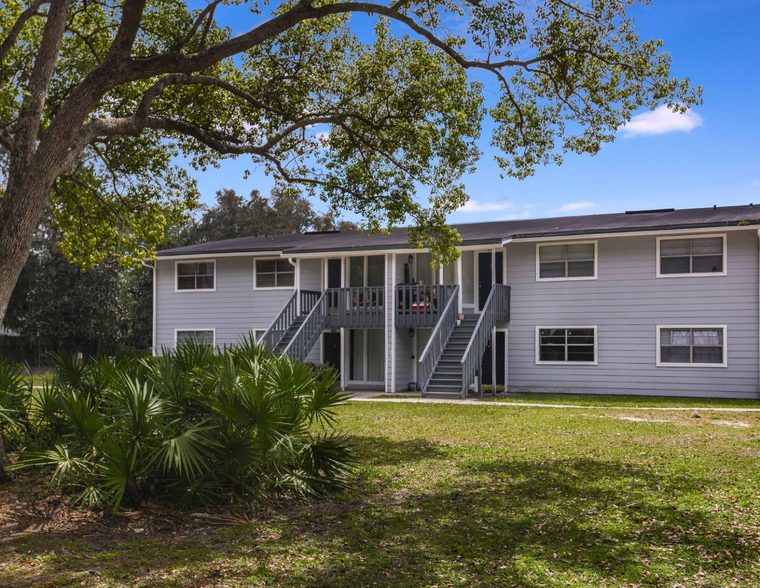
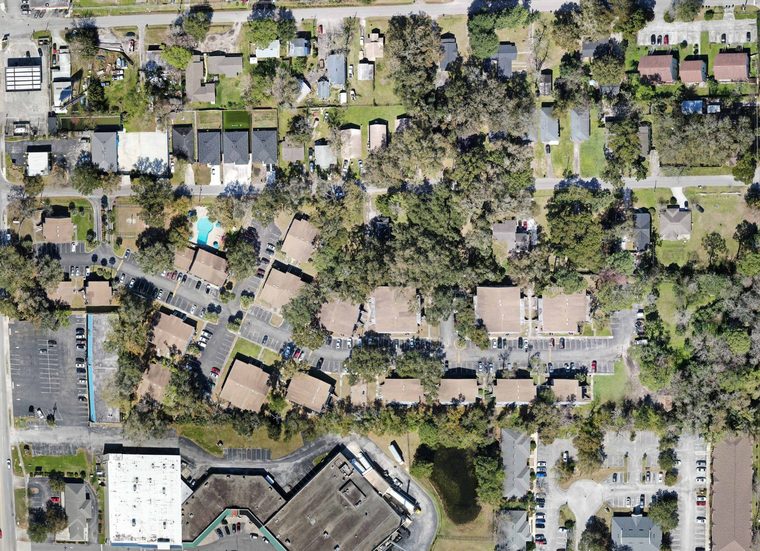
What matters is not the total but the concentration. New supply does not distribute itself evenly. It lands where land is available and entitlements are achievable, which in Charlotte means the urban core and the corridors around it, and it competes hardest with product of a similar vintage and price point.
| Submarket type | Exposure to new deliveries | Underwriting response |
|---|---|---|
| Urban core, newest product | Direct. Competes on price with lease-up concessions | Assume concessions persist through the delivery window |
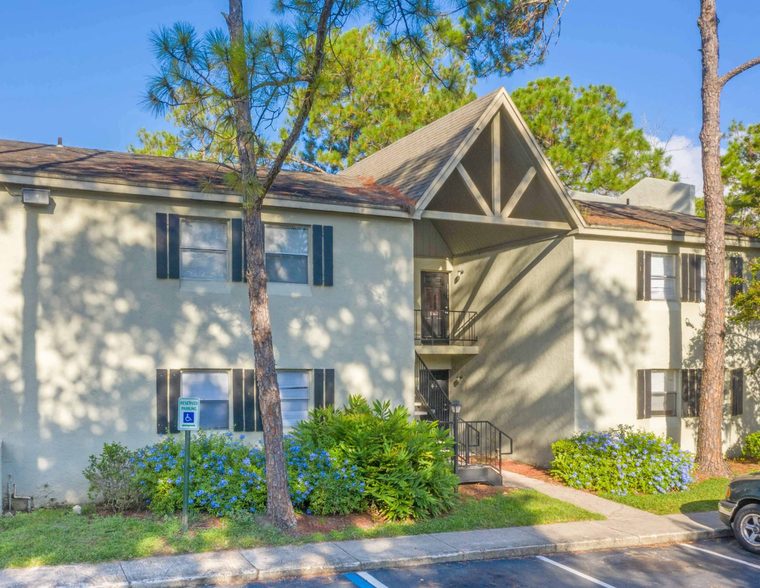
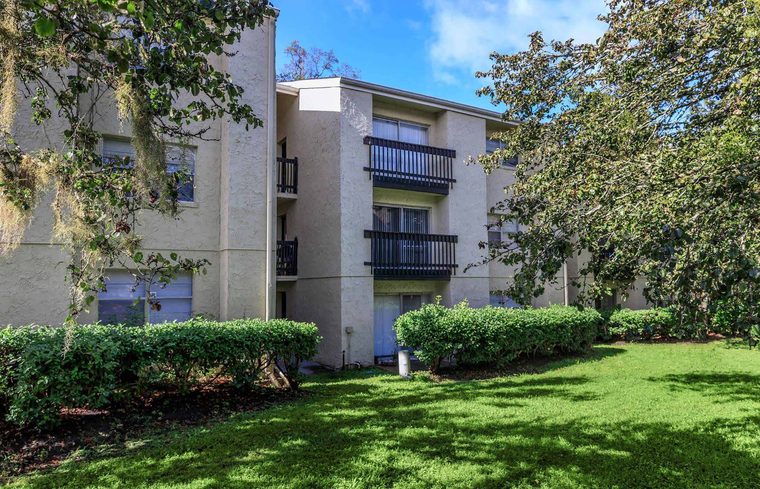
| 1980s and 1990s stock, established renter base | Indirect. Different price point and renter | Flat rents until the schedule clears, then reassess |
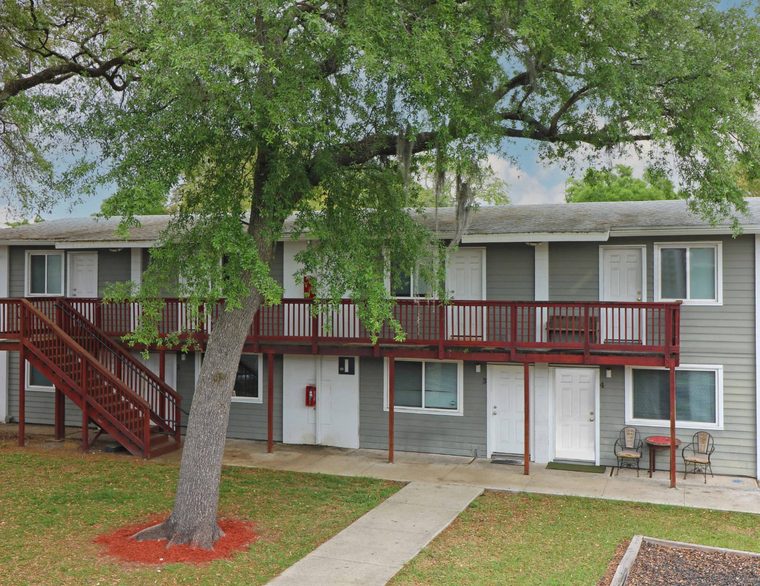
| Older workforce product | Least direct, but not immune | Concessions in new product filter down over time |
That last row is the one investors underweight. Concessions offered in new lease-ups do not stay in new product. They reset what a renter expects to pay across the submarket, and they reach older stock with a lag of a few quarters.
Permits are public and specific. The Census Bureau's Building Permits Survey publishes permitted units by structure size for metros and individual jurisdictions,3 and multifamily permits lead deliveries by roughly one to two years. Regional rental vacancy sits in Housing Vacancies and Homeownership.5
Why basis carries the argument in a heavy delivery year
In a market absorbing well with little new supply, a buyer can be wrong about price and rescued by rent growth. In a market absorbing well with heavy supply, that rescue is postponed by however long the pipeline takes to clear, and the deal has to survive on what it was bought for.
That inverts which underwriting assumption deserves the scrutiny. The rent growth line stops being the interesting one, because we hold it flat. The interesting lines become entry price per unit against replacement cost, the expense assumptions against trailing actuals, and the debt terms, because a timing bet financed with short floating debt is two bets rather than one.
The property tax line deserves separate attention in Mecklenburg County as it does everywhere: a sale can trigger reassessment, so the seller's tax bill is not the buyer's, and a model carrying the seller's number forward overstates net operating income for the whole hold and inflates the exit value too. County assessors publish their rolls and their practice, so this is checkable rather than arguable.
None of this is Charlotte-specific reasoning. What is Charlotte-specific is that the delivery schedule makes the error expensive sooner. The general method is at multifamily underwriting explained.
The regulatory question this market does not have
Charlotte removes a variable that dominates coastal underwriting, and it is worth stating precisely because it changes what a renovation plan is.
Under North Carolina General Statute 42-14.1, no county or city in the state may enact, maintain or enforce any ordinance regulating the amount of rent charged for privately owned residential rental property.6 The preemption is statewide and it is not partial.
In a regulated market a renovation premium is a regulatory proceeding: an application, a review, a determination, and a timeline nobody at the general partner controls. Here it is a pricing decision. You renovate a unit, you offer it at a price, and the market either pays it or does not.
That is a genuine advantage and it is not a guarantee of anything. Removing the regulatory constraint does not remove the market constraint, and in a heavy delivery year the market constraint is the binding one. A sponsor citing preemption as though it were pricing power has confused the absence of a legal ceiling with the presence of demand.
How we underwrite the gap between the two facts
The practical answer to a market that absorbs well and delivers heavily is a timing assumption, not a directional bet.
Our Charlotte underwriting holds rents flat until the delivery schedule clears. That is a deliberately unexciting assumption and it is the whole position. It means a deal has to work on operations, expense control and basis rather than on rent growth, and if it only works with rent growth in the first two years, we do not buy it.
The corollary is that basis matters more here than in a slower-supplied market. Buying at a price that requires the pipeline to be absorbed on schedule is buying a timing bet dressed as a business plan.
Ask any Charlotte sponsor two questions: what rent growth does year one and year two assume, and how many units are permitted within the trade area. If the first number is positive and the second is unanswered, the model has not met the market.
Independent context on the metro sits in HUD's Comprehensive Housing Market Analyses,7 and rent floors by bedroom count in Fair Market Rents.8
What absorption actually measures, and what it hides
Absorption is quoted constantly and defined rarely. It is the net change in occupied units over a period: units leased minus units vacated. It is a demand measure and it is silent on price.
That silence is the problem. A submarket can absorb every unit delivered and still be a poor place to own, if the absorption was bought with three months free rent on a fourteen-month lease. The units filled. The effective rent that filled them is a different number from the asking rent quoted in the absorption story.
| Submarket A | Submarket B | |
|---|---|---|
| Units absorbed | Strong | Strong |
| Concessions used | None | Three months free on a fourteen-month lease |
| Effective rent versus asking | Equal | Materially below |
| What the next renewal looks like | An increase | A conversation about why rent just rose |
So when a Charlotte pitch cites absorption, ask the follow-up: absorbed at what effective rent, and with what concession. Both halves are needed and only one is usually offered.
The renewal row is where this becomes an operating problem rather than an accounting one. A resident who signed with three months free faces a large effective increase at renewal even if the asking rent has not moved, and renewal conversations in a concession market are where occupancy is quietly lost.
What would make us wrong
Stating the falsifier is more useful than restating the thesis.
We would be wrong on the optimistic side if construction employment keeps rising and the pipeline extends well beyond the window we have assumed, in which case flat rents for two years is not conservative enough and concessions persist longer than modeled.
We would be wrong on the pessimistic side if net migration continues at the pace of the last five years while starts fall sharply, in which case the delivery wave clears faster than expected and holding rents flat leaves return on the table.
Both are checkable quarterly from the same public sources cited on this page, which is why we publish the sources rather than the conclusion. The full market write-up, including where we would and would not transact by submarket, is at the Charlotte guide.
The buyer you are underwriting for is five years away
A holding period assumption is also an assumption about who buys it from you and what they will be looking at. In a market with a known delivery schedule, that is more predictable than usual and it deserves to be used.
A buyer in year five is underwriting a property whose competing supply has already been built. The pipeline that suppresses your rents in years one and two is, by then, absorbed stock rather than incoming stock. That is the structural argument for buying into a heavy delivery window rather than after it: you take the timing pain and sell into a cleaner picture.
The argument only holds if two things are true. The capital structure has to survive the window, which means the loan term must comfortably exceed the delivery schedule rather than maturing into it. And the entry price has to reflect the pain, because a buyer paying a stabilized price for an asset facing two years of concessions has taken the risk without the compensation.
So the question to put to a Charlotte sponsor is a maturity question dressed as a market question: does the loan mature before or after the pipeline clears? A deal that has to refinance in the middle of the delivery window is exposed twice to the same event.
The order in which that exposure becomes a problem is set out at what happens when a deal underperforms.
Where this leaves us
We are buying selectively in Charlotte. Not enthusiastically, and not avoiding it.
The market has the demand fundamentals we look for and a supply schedule that punishes anyone who underwrites those fundamentals without discounting for timing. That combination favors sponsors with basis discipline and penalizes sponsors relying on rent growth, which is a reasonable environment to be in if you are the former.
What we would not accept from anyone, including ourselves, is a Charlotte model that assumes rent growth in the delivery window. The framework for reading any model is at multifamily underwriting explained, and the case against markets we decline is stated as plainly as the case for the ones we buy across the market guides.
What to ask about supply
- Can I see the delivery calendar within two miles, quarter by quarter, eight quarters forward?
- What are concession levels at the three nearest comparable properties, verified directly rather than from a survey?
- What is Mecklenburg County next scheduled revaluation date, and the last three assessed values?
- Does the model assume rent growth inside the delivery window, and what happens if it is flat?
What this is built on
- U.S. Census Bureau, QuickFacts, Mecklenburg County, North Carolina
- U.S. Bureau of Labor Statistics, Economy at a Glance, Charlotte-Concord-Gastonia, NC-SC
- U.S. Census Bureau, Building Permits Survey
- U.S. Census Bureau, data.census.gov
- U.S. Census Bureau, Housing Vacancies and Homeownership
- North Carolina General Assembly, North Carolina General Statute 42-14.1, regulation of rents
- U.S. Department of Housing and Urban Development, HUD User, Comprehensive Housing Market Analyses
- U.S. Department of Housing and Urban Development, HUD User, Fair Market Rents
-
No question matches that. Try another word, or ask the one that is not on this list.

Ricardo Sanabria · Grey Oaks Multifamily
Answering
Follow-up questions people ask after reading this.
Is Charlotte oversupplied?
Not as a metro, and severely so in particular submarkets in particular quarters. That is why the metro figure is the wrong unit of analysis and why we ask for a two-mile, eight-quarter calendar instead.
Ricardo Sanabria, Grey Oaks Multifamily
Does strong absorption mean rents will grow?
Not necessarily. Absorption tells you units are leasing; it does not tell you at what concession. A property can be ninety-five percent occupied on two months free and be underperforming its pro forma badly.
Ricardo Sanabria, Grey Oaks Multifamily
Would Grey Oaks buy in Charlotte?
Yes, at a basis that assumes flat rents through the delivery window. Our full position and the reasons are in the Charlotte market guide.
Ricardo Sanabria, Grey Oaks Multifamily
3 questions