Published Last updated
It is the only residential asset class where the operator does not own the dwellings. That single inversion changes the expense line, the turnover assumption, the tax profile and the politics.
The inversion at the center of the class
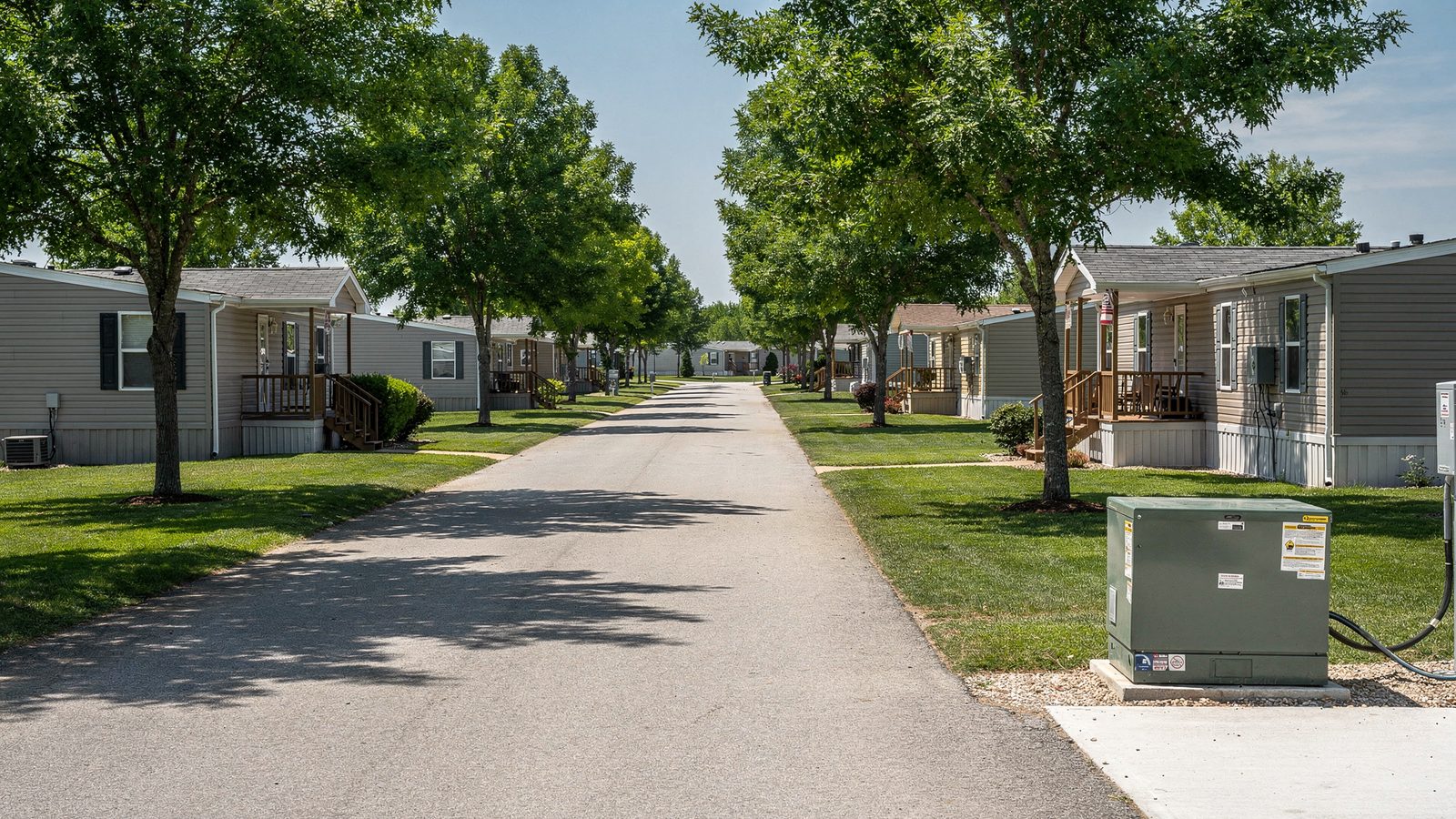
In an apartment community the landlord owns the building and the resident brings furniture. In a manufactured housing community the resident owns the home and the landlord owns everything under and between the homes: the pads, the roads, the water and sewer lines, the electrical distribution, the lighting, the common areas and the entrance.
That inversion is the whole thesis. The operator is not replacing water heaters, repainting units or re-flooring on turnover, because those are the homeowner's problem. What the operator maintains is infrastructure, which fails slowly and predictably rather than unit by unit. The resulting expense ratio is materially below an equivalent apartment community.
It also changes who bears capital risk. In apartments the owner funds the interior capital plan. Here the resident owns a depreciating asset they must maintain to community standards, and the operator's capital plan is roads, utility systems and, in older communities, infrastructure that may be at the end of its life.
The homes themselves are a federally regulated product. Under 24 CFR 3280.2, a manufactured home is "a structure, transportable in one or more sections, which in the traveling mode is 8 body feet or more in width or 40 body feet or more in length or which when erected on-site is 320 or more square feet, and which is built on a permanent chassis and designed to be used as a dwelling". Those homes are built to the federal HUD code rather than to local building code, under the National Manufactured Housing Construction and Safety Standards Act, in which Congress found that manufactured housing "plays a vital role in meeting the housing needs of the Nation" and provides "a significant resource for affordable homeownership and rental housing".
Why residents stay, and why that cuts both ways
The stickiness of this class is real and it has a physical cause. Moving a manufactured home is not like moving out of an apartment. It requires transport permits, a tow, disconnection and reconnection of utilities, new skirting and setup, and frequently a receiving community with a vacant pad willing to accept a home of that age. The cost runs to many thousands of dollars and for older homes it is often more than the home is worth.
The commercial consequence is that turnover is low, vacancy is low in a stabilized community, and a rent increase produces far less move-out than the same increase in apartments. That is why the class is described as recession resistant, and the description has some basis: the resident's alternative is not another community, it is losing the home.
That last sentence is also the reason this class carries political risk that apartments do not. A resident who cannot practically leave is a resident with very little bargaining power, and legislatures notice. Rent stabilization aimed specifically at manufactured housing, notice requirements on sale or closure, and rights of first refusal for resident associations exist in a number of states and are proposed in more.
An investor should hold both facts at once. The immobility that produces the low turnover is the same immobility that attracts regulation. A model that projects sustained above-market rent growth is implicitly projecting that no legislature reacts.
The federal tenant protections most investors have never read
This is the part of the class that has changed materially and is still poorly understood.
Fannie Mae and Freddie Mac are subject to a Duty to Serve obligation covering underserved markets, and manufactured housing is one of them. The FHFA rule requires each enterprise to adopt plans covering the market, and among the activities it credits is the financing of communities that provide, at a minimum, certain tenant pad lease protections.
The practical result is that a community financed through the agencies operates under a set of resident protections that a conventionally financed community may not. As Fannie Mae sets them out, these cover the site lease term, rent increases, payment, sublease and sale rights, and notice of a planned sale or closure of the community: a one-year renewable lease term at the tenant's election absent good cause, a minimum thirty days written notice of rent increases, a five-day grace period for non-payment, the right to sublease or assign the pad to a qualifying buyer, the right to post a for sale sign subject to community rules, and the right to sell the home within a period after eviction.
Two implications follow. First, the financing decision and the operating rulebook are linked here in a way they are not in conventional multifamily, so "how is this financed" is also a question about what the operator may do. Second, an underwriting model that assumes rapid, frequent rent increases needs to be read against a thirty-day notice requirement and a renewable lease term.
Ask directly: is this community agency financed, do the tenant site lease protections apply, and are they reflected in the rent growth assumptions?
The diligence is underground
The distinctive physical risk in this class is not the homes, it is what runs beneath them. Many communities were built decades ago with private water and sewer systems, and the condition of those systems is the single largest capital variable in the asset.
Private utility infrastructure that is at the end of its life can cost a very large sum to replace, and unlike a roof it cannot be deferred indefinitely or done a building at a time. Some communities operate their own wastewater treatment, which brings state environmental permitting and its own compliance exposure. Others are on septic, where a failure can take pads out of service.
The questions are concrete. Is the community on municipal water and sewer or private systems? If private, what is the age and condition, when was it last surveyed, and is there a state permit with compliance obligations? Are utilities master metered and, if so, is the operator reselling them and under what state rules? What proportion of pads are occupied by homes the community owns rather than residents, and why?
That last question matters more than it looks. Community-owned homes convert a land-lease business into a rental-home business, with the maintenance burden the class is supposed to avoid, and it is frequently how a struggling community fills pads.
The tax profile is unusually favorable, for a specific reason
Because the operator owns land and improvements rather than dwellings, the composition of basis is different from any other residential class. Roads, pads, utility distribution, lighting, fencing and landscaping are land improvements, and land improvements sit in a fifteen-year recovery class under the rules described in IRS Publication 946, rather than the 27.5 years applying to residential rental buildings.
A well-prepared cost segregation study on a community can therefore move a substantial share of depreciable basis into short-life classes, which is a stronger profile than an apartment building of the same price. The IRS sets out what a defensible study contains in its Cost Segregation Audit Techniques Guide, and the same warning applies here as anywhere: there are no prescribed qualifications for preparers, so the report should name its preparer and their credentials.
Combined with bonus depreciation, which IRS Notice 2026-11 records as a permanent 100 percent deduction for qualified property acquired and placed in service after 19 January 2025, the first-year deduction on a community can be large relative to the equity.
The limits are unchanged. Rental losses are generally passive under IRS Publication 925, so the deduction typically offsets passive income rather than salary, and it arrives on a Schedule K-1 with the timing and multi-state consequences described in reading your Schedule K-1. Land itself is never depreciable, and in this class land is a larger share of the purchase price than in most.
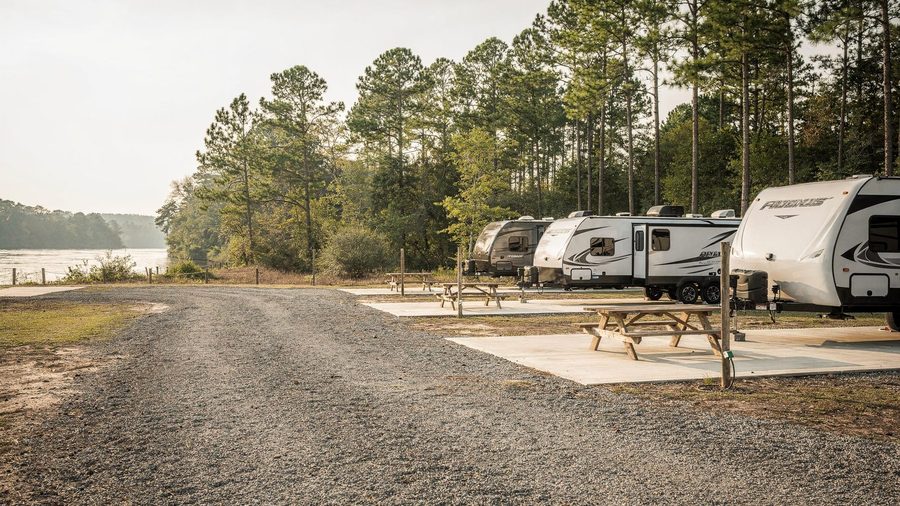
The same 15-year profile appears in RV parks, which are built from similar site work. What differs there is not the depreciation schedule but the occupancy: an RV guest may never become a tenant at all.
What actually goes wrong
Infrastructure that fails. Private water and sewer at the end of life is the capital event that defines this class, and it is discoverable in diligence if anyone looks.
Regulatory response. Rent stabilization specific to manufactured housing, closure and conversion restrictions, and resident right of first refusal statutes are all live. The immobility of residents makes this class politically visible.
Pad fill assumptions. A value-add plan that assumes filling vacant pads depends on sourcing homes, financing them for buyers and getting them installed. Each step is slower and more capital hungry than a lease-up model implies.
Home ownership drift. Communities that fill pads with community-owned homes quietly become rental-home operators, taking on the maintenance burden the class is supposed to avoid.
Capital structure. The same debt risks as any private real estate deal, covered in lender workouts and forbearance.
Where Grey Oaks stands
We do not sponsor manufactured housing communities. Grey Oaks buys and operates apartments. There is no Grey Oaks offering in this class and no track record in it. This page is here because investors ask how it compares with what we do.
Our honest read is that the tax profile is genuinely better than apartments, the expense ratio is genuinely lower, and the political risk is genuinely higher and is structurally tied to the same feature that produces the returns. Anyone presenting the low turnover without the regulatory exposure is presenting half of one mechanism.
If you are evaluating a sponsor in this class, the general method is how to vet a sponsor, their prior offerings are searchable through Form D filings on EDGAR, and what an exempt offering is and is not is set out by the SEC in its material on private placements.
What to ask a community operator
- Is the community on municipal water and sewer, or on private systems? If private, what is their age, condition and permit status?
- Is this agency financed, and do the tenant site lease protections apply?
- How many pads are occupied by resident-owned homes versus community-owned homes?
- If the plan involves filling vacant pads, where are the homes coming from and who finances the buyers?
- What rent regulation, closure restriction or resident right of first refusal exists in this state?
- What proportion of depreciable basis does the cost segregation study place in fifteen-year land improvements?
- What are the loan terms: fixed or floating, maturity, rate cap strike and expiry?
What this is built on
- Legal Information Institute, Cornell Law School, 24 CFR 3280.2, definitions, manufactured home construction and safety standards
- Legal Information Institute, Cornell Law School, 42 U.S.C. 5401, findings and purposes, National Manufactured Housing Construction and Safety Standards Act
- Federal Housing Finance Agency, Duty to Serve underserved markets rule
- Fannie Mae, Manufactured housing communities, tenant site lease protections
- Internal Revenue Service, Publication 946, How To Depreciate Property
- Internal Revenue Service, Publication 5653, Cost Segregation Audit Techniques Guide
- Internal Revenue Service, Notice 2026-11, additional first year depreciation under section 168(k)
- Internal Revenue Service, Publication 925, Passive Activity and At-Risk Rules
- Investor.gov, Private placements under Rule 506(b) and 506(c)
-
No question matches that. Try another word, or ask the one that is not on this list.

Ricardo Sanabria · Grey Oaks Multifamily
Answering
Follow-up questions people ask after reading this.
Who owns the homes?
The residents do, in a conventional community. The operator owns the land and the infrastructure and rents pads. That is the structural inversion that gives the class its low expense ratio and its low turnover.
Ricardo Sanabria, Grey Oaks Multifamily
Why is turnover so low?
Because moving a manufactured home costs thousands of dollars, requires permits, transport, and a receiving community with a suitable vacant pad, and for older homes often costs more than the home is worth. The practical alternative to staying is frequently losing the home.
Ricardo Sanabria, Grey Oaks Multifamily
What are tenant site lease protections?
A set of resident rights required of communities financed through Fannie Mae or Freddie Mac under the Duty to Serve rule, covering lease term, notice of rent increases, a grace period for payment, sublease and sale rights, and notice of a planned sale or closure of the community.
Ricardo Sanabria, Grey Oaks Multifamily
Is a manufactured home the same as a modular home?
No. A manufactured home is built to the federal HUD code on a permanent chassis and is defined in federal regulation by size and transportability. A modular home is built to state or local building code. The distinction affects financing, titling and community rules.
Ricardo Sanabria, Grey Oaks Multifamily
Why is the tax treatment better than apartments?
Because the operator owns land improvements rather than dwellings. Roads, pads, utility distribution and site work fall into a fifteen-year recovery class rather than the 27.5 years that applies to residential buildings, so cost segregation moves more basis into short-life property.
Ricardo Sanabria, Grey Oaks Multifamily
What is the biggest diligence item?
Underground infrastructure. Private water and sewer systems at the end of their life are the defining capital risk in this class, they cannot be deferred indefinitely, and their condition is discoverable before you invest.
Ricardo Sanabria, Grey Oaks Multifamily
What is the main risk to returns?
Regulation, and it is tied to the same feature that produces the returns. Residents who cannot practically move have little bargaining power, which is exactly why rent stabilization and closure restrictions aimed at this class keep appearing.
Ricardo Sanabria, Grey Oaks Multifamily
Does Grey Oaks sponsor these?
No. Grey Oaks buys and operates multifamily. We have no offering and no track record in manufactured housing. This page is comparative education.
Ricardo Sanabria, Grey Oaks Multifamily
8 questions