Published Last updated
It is the least glamorous thing on this list and the argument for it is unusually clean: they have largely stopped making the entitlement, and everything that moves freight has to be parked somewhere.
What you actually own
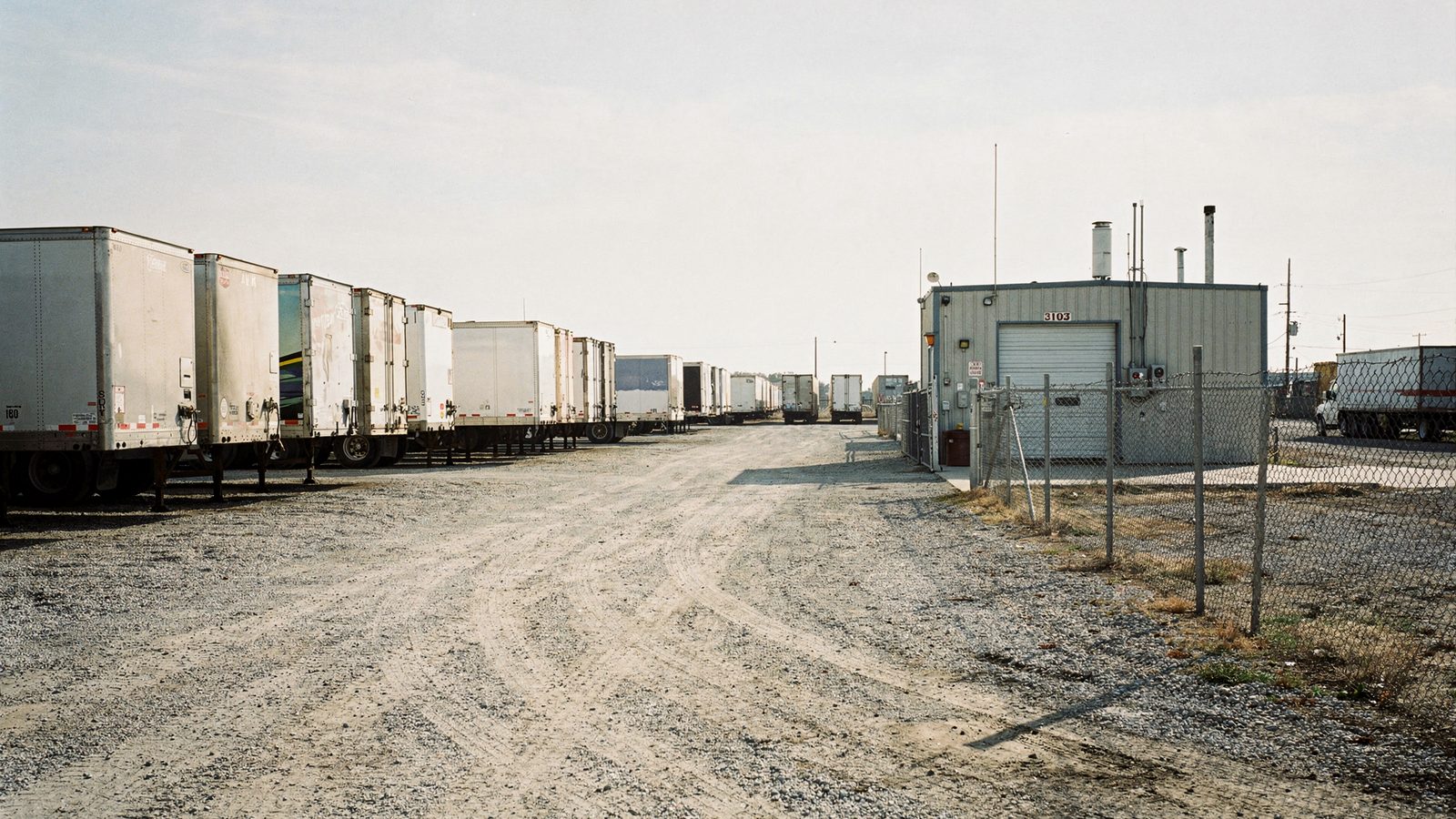
Industrial outdoor storage, usually shortened to IOS, is low-coverage industrial property where the yard is the product. A typical site is several acres of paved or compacted surface, fenced and secured, with lighting, a gate, and often a small office or shop building covering a small fraction of the land.
Uses vary and matter. Trailer and container parking for logistics operators. Truck parking. Equipment yards for contractors. Material storage for builders and utilities. Vehicle storage for fleets. Each has different tenant credit, different wear on the surface, and different environmental exposure.
The economics are unusual because there is so little to maintain. There is no roof over most of the asset, no HVAC serving it, no tenant improvement package of any significance. Operating costs are taxes, insurance, lighting, security, surface repair and snow or drainage management. That produces a high margin on collected rent.
It also means the physical asset barely depreciates in an economic sense. Paving wears and is repaired. The land does not wear at all. What can be lost, and this is the point of the next section, is the right to use it this way.
The entitlement is the asset
The investment case rests on scarcity created by local government rather than by economics, and that makes the zoning file the single most important document in the diligence.
Outdoor storage is a use that neighbors dislike and planners increasingly discourage. It generates heavy vehicle traffic, it looks industrial, it consumes land that a municipality would rather see generate more tax per acre. Over the last two decades many jurisdictions have narrowed or eliminated the zoning categories that permit it, particularly near residential growth. The result is a fixed or shrinking stock of sites that may lawfully be used this way, against demand that has grown with freight volumes.
The question that separates a sound site from a fragile one is whether the use is permitted by right, allowed by a conditional or special use permit, or operating as a legal nonconforming use, meaning it predates a zoning change and is grandfathered.
That last category deserves care. A legal nonconforming use often cannot be expanded, may lapse if it is discontinued for a defined period, and in many jurisdictions cannot be rebuilt if the property is substantially destroyed. An insurable casualty can therefore extinguish the entitlement that made the site valuable. Ask for the zoning verification letter, ask which category the use falls in, and if it is nonconforming, ask what the local ordinance says about discontinuance and reconstruction.
The demand side, and the federal evidence for it
The clearest documented demand driver is truck parking. The Federal Highway Administration maintains work on truck parking arising from Jason's Law, which directed attention to the shortage of safe parking for commercial vehicles and to surveying its extent. Federal hours-of-service rules require drivers to stop, and a driver who must stop and cannot find lawful parking is a documented safety and compliance problem.
That is a durable structural mismatch: the number of trucks and the rules governing when they must rest are set nationally, while the supply of places to park them is set by thousands of local zoning decisions that have generally moved against it.
The wider driver is freight and distribution activity. Metro employment in transportation and warehousing is a reasonable proxy and sits in BLS Economy at a Glance, alongside the local industrial base you can assemble from data.census.gov.
Location logic is specific. IOS sites earn from proximity to interstates, ports, intermodal terminals and distribution clusters, and from being close enough to labor. A cheap site an hour from the freight it serves is cheap for a reason.
The same freight and power build-out that drives yard demand is reshaping a very different class nearby. Data centers compete for the same industrial-zoned land and the same utility capacity, and in several markets they now outbid every other use for it.
The tax profile is the honest weakness
This is where IOS compares poorly with almost everything else on this list, and any presentation that skips it is skipping the main counterargument.
Land is not depreciable. Ever. In an asset whose value is mostly land, the depreciable basis is limited to the improvements: paving, fencing, lighting, drainage, utilities and whatever small building exists. Those improvements sit in shorter recovery classes under the framework in IRS Publication 946, which helps, but they are a modest share of a purchase price dominated by dirt.
The practical consequence is that an IOS deal generates far less depreciation shelter per dollar invested than an apartment, a manufactured housing community or an RV park. For an investor whose main reason for holding private real estate is the tax profile, that is a material difference and it should change the comparison.
A cost segregation study still earns its fee by identifying the improvement components properly, following the approach in the Cost Segregation Audit Techniques Guide, and bonus depreciation applies to qualifying short-life property as IRS Notice 2026-11 describes. It simply has less to work with.
The passive activity limits are unchanged, per IRS Publication 925, and reporting arrives on a Schedule K-1 in the usual way.
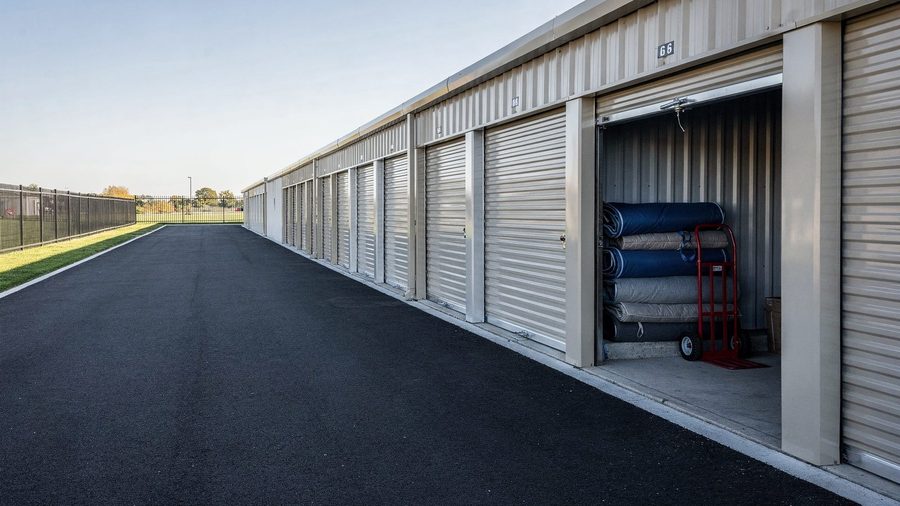
The comparison that makes this concrete is self-storage, which solves the same customer problem with a building. The building depreciates over 39 years. Yard does not depreciate at all, which is why two assets serving adjacent demand can produce very different after-tax returns.
What actually goes wrong
Entitlement loss. A nonconforming use that lapses, cannot be rebuilt after a casualty, or is narrowed by an ordinance change. This is the class-specific failure and it is discoverable in the zoning file.
Environmental condition. Yards store vehicles, equipment and materials. Historic uses may have left contamination, and stormwater running off a large impervious yard is regulated. The EPA program covering stormwater discharges associated with industrial activity is the relevant framework, and a permit brings monitoring obligations.
Tenant credit and rollover. Users are often small operators on short leases with limited financial disclosure. High margin does not help if the yard is empty.
Surface and drainage. Heavy vehicles destroy inadequate surfaces, and a yard that ponds is a yard that cannot be used. Repaving acreage is a real capital item.
Basis risk. Because so much of the value is land, the exit depends heavily on land pricing and on the entitlement surviving. There is no building to fall back on.
Where Grey Oaks stands
We do not sponsor industrial outdoor storage. Grey Oaks buys and operates multifamily. There is no offering here and no track record in the class.
Our honest read is that the scarcity argument is the most durable on this list after marinas, because it is produced by zoning that is politically difficult to reverse. The equally honest counterweight is that the tax profile is the weakest here, and many investors in private real estate are partly buying the depreciation. Those two facts should be weighed together rather than the first being presented alone.
If you evaluate a sponsor in this class, the method is how to vet a sponsor, prior offerings are visible through Form D filings on EDGAR, and the SEC explains what an exempt offering is in its material on private placements.
What to ask an IOS sponsor
- Is the outdoor storage use permitted by right, by conditional use permit, or legal nonconforming?
- If nonconforming, what does the ordinance say about discontinuance and about rebuilding after a casualty?
- May I see the zoning verification letter and any conditions attached to the permit?
- What is the Phase I finding, and is there a stormwater permit with monitoring obligations?
- What is the condition and remaining life of the yard surface and the drainage?
- Who are the tenants, what is the lease term and rollover schedule, and what financial disclosure do they provide?
- What share of the purchase price is land, and therefore not depreciable?
What this is built on
- Federal Highway Administration, Truck parking, freight management and operations
- U.S. Environmental Protection Agency, Stormwater discharges from industrial activities, NPDES
- Internal Revenue Service, Publication 946, How To Depreciate Property
- Internal Revenue Service, Publication 5653, Cost Segregation Audit Techniques Guide
- Internal Revenue Service, Notice 2026-11, additional first year depreciation under section 168(k)
- Internal Revenue Service, Publication 925, Passive Activity and At-Risk Rules
- U.S. Bureau of Labor Statistics, Economy at a Glance
- Investor.gov, Private placements under Rule 506(b) and 506(c)
-
No question matches that. Try another word, or ask the one that is not on this list.

Ricardo Sanabria · Grey Oaks Multifamily
Answering
Follow-up questions people ask after reading this.
What am I actually buying?
Land and the legal right to use it for outdoor storage. The building, where there is one, is usually a small share of value. That is why the zoning file matters more than the improvements survey.
Ricardo Sanabria, Grey Oaks Multifamily
Why is supply constrained?
Because many municipalities have narrowed or removed the zoning categories that permit outdoor storage and truck parking, particularly near residential growth. The constraint is political rather than economic, which is what makes it durable.
Ricardo Sanabria, Grey Oaks Multifamily
What is a legal nonconforming use and why does it matter?
A use that predates a zoning change and is grandfathered. It often cannot be expanded, may lapse if discontinued for a defined period, and in many jurisdictions cannot be rebuilt after substantial destruction. A fire can therefore extinguish the entitlement that created the value.
Ricardo Sanabria, Grey Oaks Multifamily
Is the truck parking shortage real?
It is documented at federal level. The Federal Highway Administration maintains work on truck parking arising from Jason's Law, and federal hours-of-service rules require drivers to stop, which creates demand for lawful parking that local zoning has generally not accommodated.
Ricardo Sanabria, Grey Oaks Multifamily
How is the tax treatment?
Weaker than most classes here, and it is the main counterargument. Land is never depreciable, so in an asset dominated by land the depreciable basis is limited to paving, fencing, lighting, drainage and any small building.
Ricardo Sanabria, Grey Oaks Multifamily
What are the environmental risks?
Yards store vehicles, equipment and materials, so historic contamination is possible, and stormwater runoff from a large impervious yard is regulated under the EPA industrial stormwater program, which can bring permit and monitoring obligations.
Ricardo Sanabria, Grey Oaks Multifamily
Who are the tenants?
Frequently small logistics, construction and fleet operators on short leases with limited financial disclosure. The margins are high but the credit and rollover profile is not comparable to a single-tenant industrial building.
Ricardo Sanabria, Grey Oaks Multifamily
Does Grey Oaks sponsor this?
No. Grey Oaks buys and operates multifamily. We have no offering and no track record in industrial outdoor storage. This page is comparative education.
Ricardo Sanabria, Grey Oaks Multifamily
8 questions